

You Should Read EVERYONE KNOWS YOUR MOTHER IS A WITCH by Rivka Galchen
How a fictional account of an actual 17th-century witchcraft trial helped me process the swatting that hit my school last week

Click “Read in app” to view full post.

Last week was the perfect example of why I don’t bother with New Year’s resolutions. The minute you get your spring semester prepped and your morning routine polished, you’re likely to catch strep throat while your school receives a bomb threat.
Wait. I’m being too melodramatic. Let me revise that for accuracy: The minute you enter a high school, you’re likely to encounter the long-tentacled arms of violence.
The violence may be in the past; it may be threatened, to varying degrees of credibility; it may be nothing more than the ugly, nameless fear at the back of your mind that you do your best to ignore; but those tentacles have sticky little suckers. If you’re a teacher or student in America, good luck trying to pluck them off.
I missed the swatting chaos—AI-voiced bomb threat, evacuation, delayed start, and subsequent SnapChat active shooter threat—at school last Wednesday because I was at the pharmacy waiting for antibiotics. (Spare a thought for my poor substitute teacher.) Denver7 reported that eleven schools across Colorado received the same ominous voicemail.1 Swatting incidents, or hoax reports of bomb and/or active shooter threats, are unnervingly common. According to The Trace, “The nonprofit K-12 School Shooting Database tracked 853 swatting incidents between January 2023 and June 2024, the most recent data available.” Resources continue to be wasted, communities continue to be traumatized2, and uncertainty continues to permeate our hallways and classrooms. It may fade in intensity, but I doubt the fear will ever be absent.
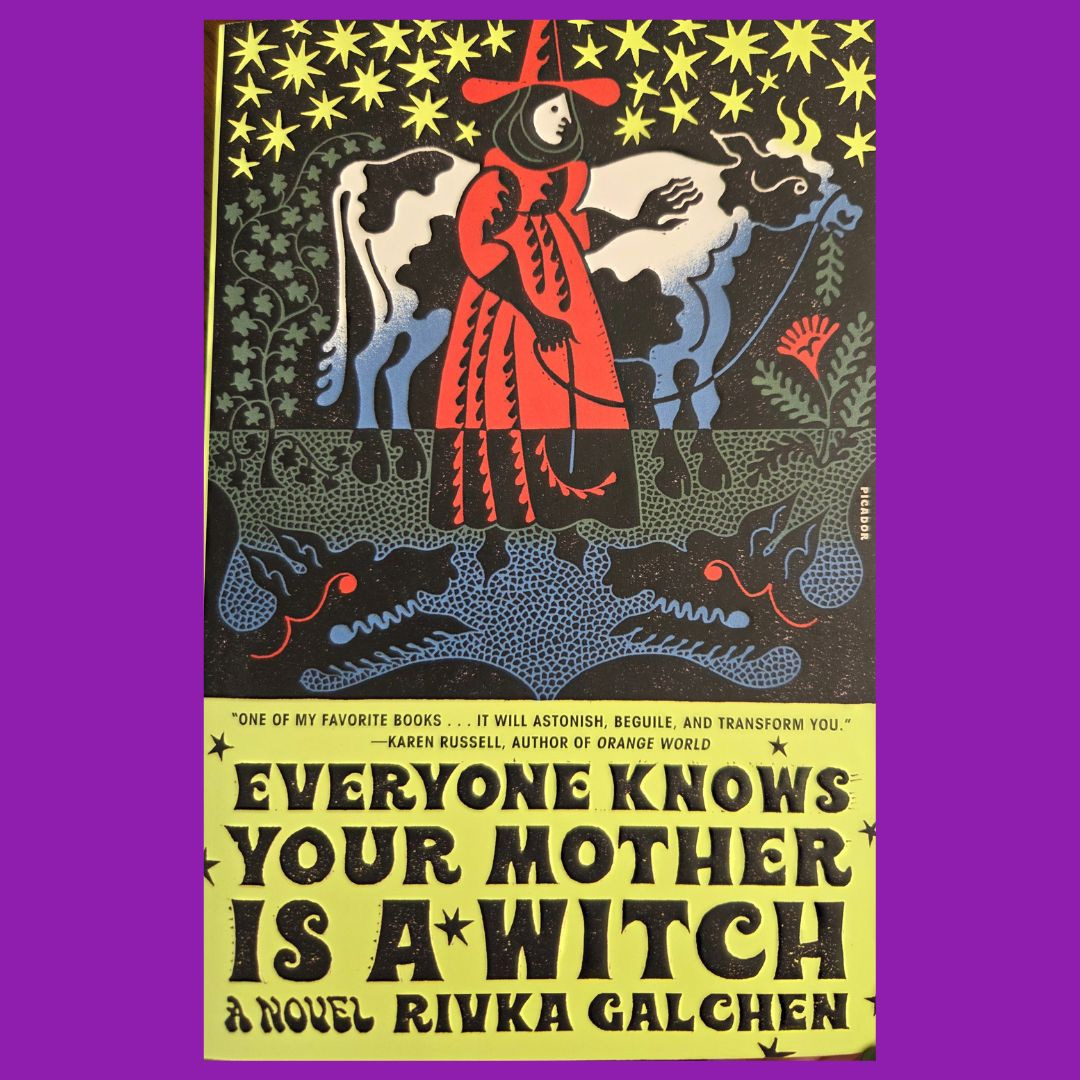
During such a week, is it any wonder I reread Rivka Galchen’s Everyone Knows Your Mother is a Witch? In the novel, which is based on true events3, Katharina Kepler’s neighbors accuse her of serving poisoned wine, riding a goat backwards, digging up skulls, killing livestock, and muttering demonic curses. The claims are outlandish—and as noncredible as, say, an AI-voiced bomb threat—but the danger Katharina faces is very real.
If you’re thinking this sounds like The Crucible, think again.4 We’re in the early 17th century German duchy of Württemberg. Katharina Kepler, the mother of famed astronomer Johannes Kepler, is a widow who lives alone, except for her beloved cow Chamomile.5 Her neighbor Ursula accuses Katharina of cursing her and causing Ursula great pain. As Ursula spreads rumors and gathers townspeople to her side, accusations proliferate. Katharina, elderly and illiterate, relies on her neighbor Simon to act as her legal guardian.
When historical fiction writers overuse period details and vocabulary, they may unintentionally construct a barrier between the narrative and the reader. On the other hand, when such writers rely too heavily on anachronisms, they risk losing their authority as the voice of their chosen age. Galchen’s inventive approach infuses Katharina’s voice with wit that both humanizes her character and conjures the milieu of the Holy Roman Empire circa 1615.

Take this example: When she is first accused, Katharina doesn’t pay Ursula much mind, instead thinking to herself that Ursula, her brother, and the ducal governor “loo[k] like a pack of dull troubadours who, come morning, have made off with the butter.” The upstart ducal governor himself resembles “an unwell river otter in a doublet” (8). The period details of “troubadors” and “doublet” place us in Katharina’s world, but her funny take on her accusers reminds us that human emotions like indignation remain constant.6
Katharina does her best to keep her criticisms to herself. She and her children fight to protect her good name, but the novel is not wholly hers. Structurally, Everyone Knows Your Mother is a Witch is a wonderful portfolio of real and imagined evidence. Katharina’s account is written as a transcription of her recollections to Simon, who serves as her scribe. In other sections, Simon adds his own first-person commentary. Interspersed throughout are formal letters written to Duke Frederick of Württemberg as well as depositions of various townspeople. Each deposition opens with the same question, which, according to the author’s acknowledgments, Galchen took directly from a translation of Kepler’s trial records: “Do you understand that any false testimony you knowingly give will provoke God’s great anger in your earthly life and will deliver your soul unto Satan upon your death?”
(If only such testimony were required of swatters.)
My favorite moments are when Katharina addresses Simon directly. At one point, recalling how her daughter lost a pregnancy, Katharina says, “That made me suspect the others of sorcery. But sad things are so commonplace. And as you say Simon: see no monsters” (71).
Simon’s advice becomes a sort of mantra for Katharina. She doesn’t always succeed in “see[ing] no monsters” and finding the good in others. Frustrated, she accuses another neighbor of having a witch for a mother. But even when she admits to wishing harm on Ursula for starting the whole messy business, she also dreams of having an open and forgiving heart. She confesses, “I dream of the whole town clamoring for her death. . . . The baker tells me that she soured his cream, and the tailor that her face had made his wife go lame, and that the bricklayer would simply weep when he saw her . . . and that I would be the only one who said: Enough, we should take pity on her. I see no monster” (193).
Because she can identify and see her accusers, Katharina can extend her understanding to them. But the swatters and SnapChatters that terrorized us last week will likely never be caught. Even if they are, shutting one hoax down wouldn’t do anything to prevent another. As David Riedman, PhD, the creator of the K-12 School Shooting Database, wrote in December 2023, “These pure hoax calls made over internet services cannot be blocked or traced.”7
How can we see no monster when the monster itself is online and invisible? When all we can see are the plagiarized SnapChats it spawns, the way a chopped-off tentacle regenerates? And is such a pernicious monster even worthy of understanding?
Katharina’s neighbor Simon may have some insight. Describing a troublesome time in his younger days, he recalls, “Next thing I knew, and while I was still early in learning my trade, before I had been accepted to the guild, rumors had spread about me and my connection to the monastery. Rumors that said more about the back rooms and dreams of the rumormongers than about me” (144).

When a new school week starts tomorrow, I will think about Simon as I enter the building. Swatting says more about the swatters than it does about my school. I am lucky to work in a building with a supportive administration, an engaged staff, and SROs whose judgment and expertise I trust absolutely.8
I am also grateful for books like Everyone Knows Your Mother is a Witch. There are many valid comparisons between 17th-century witch trials and 21st-century American life that could be taken from this book, and if I hadn’t had the week I did, I may have written a different variation for you today. I no doubt had a different interpretation when I first read the book a few years ago. I love literature’s capacity to shape-shift, to reform itself in my mind as I draw connections between the text and my own experiences. I feel less alone when a made-up story speaks to my fears and worries. Who could have predicted that a fictional account of an actual 17th-century witchcraft trial could help me process the swatting that hit my school last week? Not me, and certainly not Galchen. Isn’t that beautiful?
As it turned out, antibiotics notwithstanding, Everyone Knows Your Mother is a Witch was just what the doctor ordered for me last week. You might need a dose, too.

As I mentioned last month, one of my highlights in the classroom this month is a book club unit for my seniors. After our Short Novel November unit, I wanted to point them toward big, long, juicy books for January.9

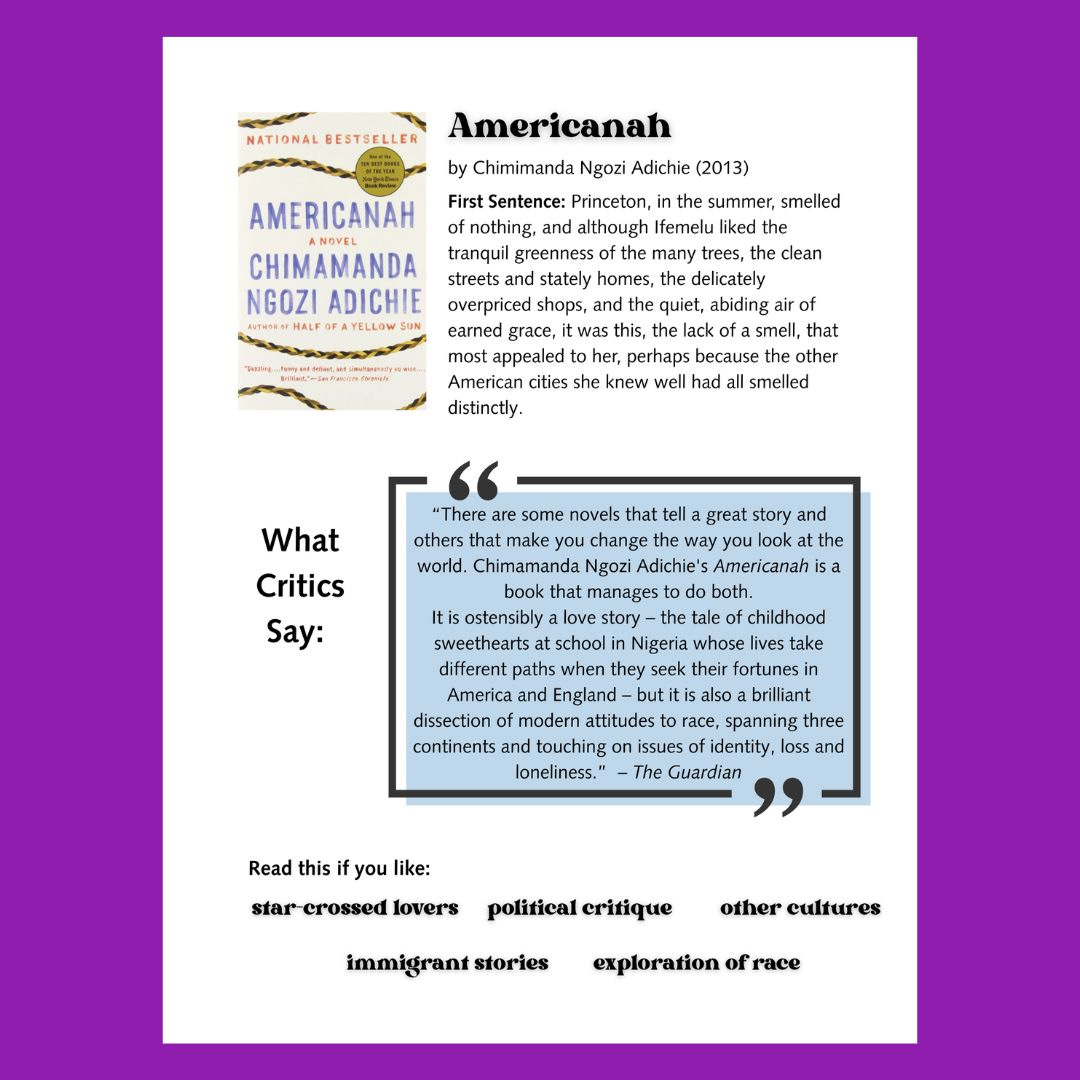
I always start any kind of independent reading or book club unit with book talks. In addition to sharing my thoughts on these titles, I also created one-pagers for them. Each one-pager includes the first sentence or so, an excerpt from a published review, and four or five keywords that offer “shortcuts” into the text. Grab FREE copies of all the one-pagers here! If none of these titles are relevant for your class, you can make FREE copy of my template here and adjust to your needs.
Thanks for sticking with me. Let’s see no monsters, when we can, and be stronger than the fear, when we can’t.
Kate
Our SRO said the actual number was higher by the end of the day.
Jennifer Mascia reports for The Trace, “The trauma instilled by a swatting hoax isn’t just borne by the student, experts said. It also hurts their families, and ripples out to their communities.” This is especially true in a school like mine that has suffered a school shooting in the past.
Galchen cites Ulinka Rublack’s The Astronomer and the Witch: Johannes Kepler’s Fight for His Mother as inspiration for this novel. I haven’t read Rublack’s book, but I listened to her interview on the Not Just the Tudors podcast, and it’s well worth forty minutes of your time, if you are a fellow history nerd.
Not that I’m against The Crucible. I’m down for all the John Proctor memes. (And if you happen to be teaching The Crucible, here’s my film-as-lit unit.)
You should read this book just for Katharina’s love of Chamomile: “I have sometimes wondered: Why didn’t God leave the world as frank and easy to understand as a cow? Instead, it’s all a puzzle, for us to tease out which points of light are planets and which are stars, and who can be trusted and who cannot” (100).
Who among us hasn’t mocked our enemies through unkind comparisons? Oh, to be a fly on the wall in my daughter’s third grade classroom. The creative insults she reports back to us rival anything Shakespeare could think up.
Riedman estimates the cost of swatting schools in 2023 around $82 million dollars. According to him, dispatching huge police forces in the case of hoaxes actually perpetuates the pattern. He argues, “We don’t have the power to stop someone from making 911 calls over the internet. We do have the power to learn, adapt, and scale back how police respond to swatting.” Logically I can see his point, although emotionally I find it hard to swallow.
Do I agree with every top-down decision? Nope. But on the whole, I feel safe at my school.
No, I did not call this unit Big Juicy January Books . . . although maybe I should have?
It's dreadful what happened at your school! I'm glad things turned out okay. If I were a jurist of some sort I would categorize swatting as witchcraft